
Choosing a funeral limousine in Palm Beach County means matching the vehicle and itinerary to the family’s needs. Rates are provided after a quote request and depend on the trip details, including the vehicle selected, route, and schedule. Options can accommodate different group sizes, from a sedan to limousines listed for 10 or 18 passengers.
During a difficult time, clear arrangements matter as much as a comfortable ride. This guide explains how to compare vehicle options, what details to prepare when booking, how discounts may apply, and how to plan transportation between locations across the county. You’ll also learn which details shape a quote, so you can make arrangements with greater clarity and care.
Key Takeaways
- Prepare the service schedule, pickup and drop-off locations, and passenger count to help shape a clear quote.
- Compare the itinerary and booking terms carefully, including how any discount or minimum booking requirement applies.
- Plan travel between the funeral, cemetery, and reception as one coordinated route, with each stop and timing clearly outlined.
- Choose a vehicle based on the group’s needs, with sedan, 10-passenger limo, and 18-passenger limo options described in the article.
- For transportation across Palm Beach County, share all locations in advance so the route can be planned around the day’s schedule.
Chauffeur coordination and respectful service
A funeral limousine in Palm Beach County is part of a carefully timed day, not simply a ride. A professional chauffeur follows the agreed itinerary, communicates clearly, and treats passengers with discretion. Before the service, designate one family member or funeral-home contact to share updates. A single point of contact helps prevent conflicting directions if plans change.
Provide the pickup address, service location, cemetery entrance, and any reception stop in writing. Include the name of the person the chauffeur should meet and a phone number for day-of coordination. For example, if guests gather at a family residence in West Palm Beach before traveling to a memorial, specify the pickup location and planned departure time. Clear details reduce uncertainty during an already demanding day.
- Share the itinerary: List each stop in sequence, including the funeral home, place of worship, cemetery, or reception venue.
- Identify the contact: Name one person who can relay changes, such as a revised gathering point or an added stop.
- Clarify passenger needs: Give the expected passenger count and note who may need extra time entering or leaving the vehicle.
- Set meeting instructions: Describe a practical landmark, such as a main entrance or designated driveway, rather than relying on a vague location.
- Communicate updates promptly: If the family changes the schedule, have the designated contact pass along the revised details.
Professional discretion shows through conduct. A respectful chauffeur uses a composed tone, follows the family’s instructions, and avoids unnecessary conversation. The driver should keep family matters private and focus on the transportation plan. Relatives may prefer a quiet ride after the service, for example. A considerate approach respects that preference without requiring a lengthy explanation.
Coordination also means distinguishing a planned stop from an unexpected change. If the procession includes a cemetery and reception, provide both addresses before travel begins. If the schedule shifts, the designated contact can communicate the new destination and timing. Avoid relying on separate passengers to give different directions. One clear update helps keep everyone aligned.
Before the day, review names, pickup points, and the sequence of locations with the person coordinating transportation. Confirm that the written itinerary reflects the family’s preferences, including whether passengers should be collected together or at separate locations. In Palm Beach County, this preparation helps the chauffeur serve the plan with quiet professionalism while allowing family members to remain focused on one another.
Funeral service discounts and minimum booking requirements
Booking terms shape the service plan, while discounts can affect the quoted total. Review both alongside the itinerary, passenger count, and requested vehicle.
Package Inclusions and Minimum Booking
What is included in a funeral limousine service? The arrangement covers the selected vehicle, chauffeur service, and agreed pickup and destination details. Make sure any stops and additional transportation are included in the itinerary and quote.
Minimum booking requirements can affect how a trip is arranged. Read the quote for any required service duration, included locations, and charges tied to additional time or stops. For example, a family traveling from a residence to a funeral service and then a cemetery should have each leg described. This makes the scope easier to understand before accepting the arrangement.
Booking Timing
How far in advance should I book a funeral limousine? Arrange transportation as soon as the service date, times, and locations are known. Early planning gives the family time to settle the route, passenger count, and vehicle choice before the day’s schedule begins.
If plans are still developing, prepare the confirmed details first and identify what may change. Share updates if the service time or destination shifts, so the transportation plan reflects the latest itinerary. A clear written summary helps prevent missed stops or conflicting instructions.
Discounts and Quote Details
A first-ride discount should be treated as a possible adjustment, not assumed when estimating the total. The quote should show whether a discount applies and how it affects the requested trip. Compare the final terms, rather than relying on a general offer description.
For a useful quote, gather the trip details before discussing discounts or minimums:
- Service date and scheduled pickup time.
- Pickup address and every planned destination.
- Passenger count and preferred vehicle type.
- Requested stops, waiting periods, or return transportation.
- Name and phone number for the person coordinating arrangements.
What information is needed to arrange funeral transportation? Provide the date, pickup time, addresses, passenger count, preferred vehicle, and a day-of contact. Include each stop, such as a funeral home, cemetery, or reception venue, so the quote reflects the full itinerary.
Review any booking terms for how schedule changes are handled and what the quoted service covers. For instance, an added reception stop may alter the route or service time. Clear details help families compare arrangements fairly and understand the basis of the quote without relying on an assumed discount or unstated minimum.
Funeral transportation across Palm Beach County
Based locally in West Palm Beach, Elite car and limo service provides funeral limousine transportation for passengers throughout the surrounding area. To plan a route, identify each pickup point, destination, and passenger group.
Transportation for Family and Guests
Families may need separate pickups for relatives staying at different addresses. For example, one group could depart from a home in the local area while another meets nearby. List each pickup location and passenger count, then decide whether the itinerary should include separate pickups or a shared meeting point.
For larger gatherings, plan transportation around where guests are staying and where the service begins. A group traveling to a ceremony may have different timing needs than relatives already near the venue. Give guests one clear meeting address and departure time to reduce uncertainty.
Service Coverage and Itinerary Planning
Routes may connect various points in the region, depending on the specific addresses, service time, and sequence of stops. Share complete locations rather than city names alone, especially when the day includes several destinations.
For a trip to a local cemetery, provide both addresses and any planned gathering point. A service connecting different area venues also needs clear pickup instructions. A written itinerary helps the transportation coordinator understand the route from start to finish.
Which funeral limousine services operate in the area? Elite car and limo service provides funeral limousine transportation for passengers, with arrangements based on the requested locations and schedule. Share the full itinerary when requesting a quote for your service.
Group transportation takes more planning than a single pickup. Start by identifying who needs a ride, where each group will gather, and whether everyone is traveling to the same destination. Then consider the following:
- Use one family contact to share itinerary updates with guests.
- Give each pickup group a specific address and meeting point.
- Separate guests by departure location when their schedules differ.
- Include the funeral venue, cemetery, and reception destination, if planned.
- Tell guests whom to contact if they need route or pickup details.
These steps help plan travel between various local addresses and neighborhoods. They also help distinguish transportation for immediate family from guest travel. If guests are making their own way to the ceremony, give them the venue address and arrival details. If they are traveling together, provide the shared pickup point and destination sequence. A well-defined plan gives relatives and guests practical information without requiring them to interpret incomplete directions during a difficult day.
Transportation between memorial services, cemeteries, and receptions
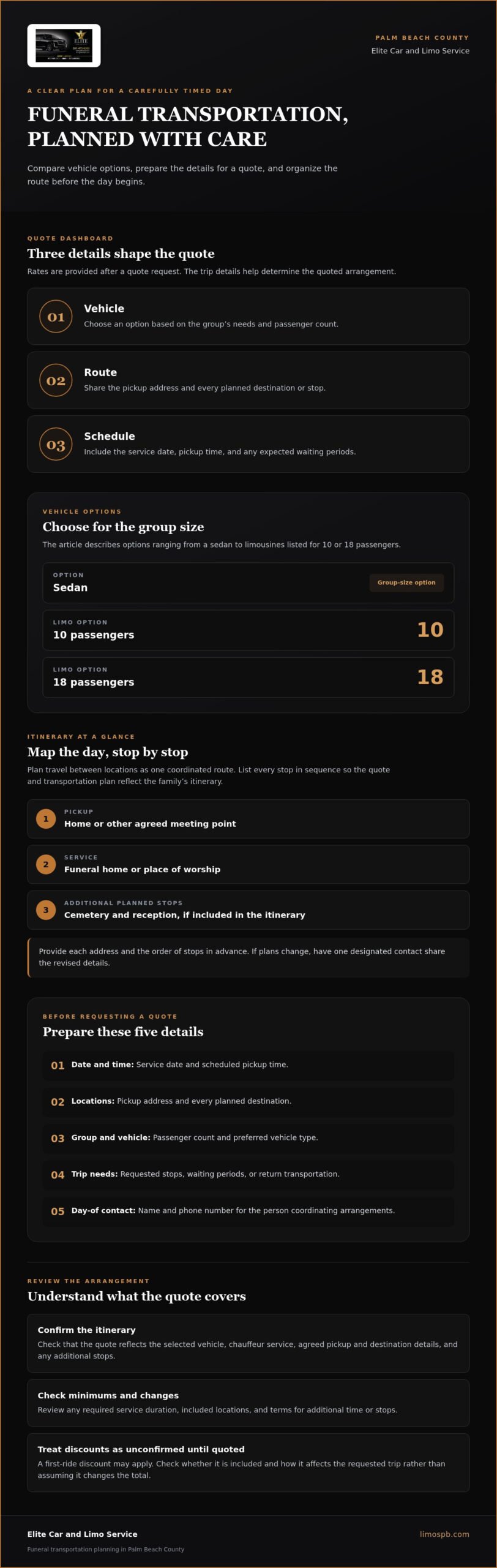
Multiple destinations need one coordinated itinerary. List each location in travel order, then assign a contact to communicate any changes.
Are there local rules or permits for funeral processions in Palm Beach County? Permit requirements can depend on the route and any requested traffic control. Share the planned route with the funeral director and determine applicable local requirements before organizing a procession.
For example, a service may begin at a funeral home in West Palm Beach, continue to a cemetery, and end at a reception in Palm Beach Gardens. Record the full addresses and planned arrival times for each stop. Include the name of the person coordinating the schedule, so updates reach one contact instead of several relatives giving separate instructions.
Allow realistic travel time between locations. Share the service start time, gathering time, and planned procession departure. A route from Wellington to a ceremony in Lake Worth differs from a short transfer within West Palm Beach. Give guests a clear meeting point and do not ask them to follow a vehicle without clear instructions.
- Set the sequence of the funeral home, service venue, cemetery, and reception.
- Provide complete addresses and a clear pickup or meeting location for each stop.
- Identify one family or funeral-home contact for schedule updates.
- Share revised arrival information with passengers if the itinerary changes.
What happens if the funeral schedule changes or a vehicle is delayed? The designated contact should notify the transportation coordinator and affected passengers promptly. Update the next stop and expected arrival time, then share the revised plan with the family.
Keep changes specific. If a memorial service in Jupiter ends later than expected, communicate whether the cemetery departure or reception arrival has shifted. If a pickup point changes from a residence to the funeral home, send the new address directly to the coordinator and passengers. Avoid relying on informal messages passed between guests, since details can be misunderstood or missed.
For a cemetery followed by a reception in Boynton Beach, include both destinations in the original itinerary, even if the reception timing remains flexible. Mark confirmed arrival times separately from estimates. This distinction helps relatives understand the plan without treating uncertain timing as final.
Before travel begins, review the itinerary with the family contact and funeral-home coordinator. Confirm the order of stops, meeting locations, and who will communicate changes. A written plan gives the group one reference point throughout the day, from the first pickup to the final destination.
Funeral vehicle options for different group sizes
The right vehicle depends on who is riding together, not just the guest list total. In Palm Beach County, compare a sedan, stretch limousine, 10-passenger limo, and 18-passenger limousine against the family’s travel plan.
Start with a passenger count for each trip segment. Immediate family may travel together, while other relatives meet at the service or cemetery. For example, a sedan may suit a small party, while a larger group can consider the listed 10-passenger or 18-passenger limo options. Match the choice to the people actually riding, rather than everyone invited to the service.
A stretch limousine may suit a funeral party seeking shared transportation. Its suitability depends on the passenger count and itinerary. Confirm the vehicle’s capacity for the group rather than relying on the vehicle name alone. Count everyone riding, including relatives joining for only part of the route.
For a larger gathering, compare one vehicle with separate transportation for different groups. A single 18-passenger limo may help keep one party together, while multiple vehicles can serve relatives departing from different addresses. The practical choice depends on pickup locations, planned stops, and who needs to arrive together. Consider the return journey too, especially if guests leave the reception at different times.
- Sedan: Consider it for a smaller group traveling together.
- Stretch limousine: Compare this option for a shared family ride.
- 10-passenger limo: Consider it for a group sized for this option.
- 18-passenger limousine: Assess it for a larger party traveling together.
Before choosing a vehicle, make a simple passenger-and-route list. Note each pickup, destination, and who will ride on each leg. For instance, relatives might travel from a Palm Beach Gardens residence to a West Palm Beach service, while other guests meet at the venue. That can affect whether one vehicle or separate pickups make more sense.
Consider the passengers’ needs, too. A family member may need extra time getting in and out or prefer a quieter ride with close relatives. Share those preferences during planning, along with the passenger count and route. These details help match the vehicle choice to the day’s needs, rather than choosing by appearance alone.
For a group-size recommendation, describe your funeral transportation needs with the passenger count, pickup points, and destinations. A clear trip outline makes it easier to compare vehicle options and plan a respectful journey across Palm Beach County.
Elite Car and Limo Service: Airport Transfer
Elite Car and Limo Service can coordinate airport transportation for relatives arriving for a funeral in Palm Beach County. An Airport Transfer between Palm Beach International Airport and a local hotel or family gathering point can simplify one part of the travel plan. Share the arrival details, destination, and passenger needs when arranging the ride.
For family members arriving by private aircraft, Private Aviation Services provide another ground transportation option. These airport arrangements complement funeral transportation while keeping arrival travel distinct from the memorial-day itinerary.
To discuss Airport Transfer or Funeral Limo Service, contact Elite Car and Limo Service at (561) 475-6365 or visit limospb.com.
Plan the next travel detail with care
A thoughtful transportation plan can give family members one less detail to manage as they gather in Palm Beach County. Consider relatives arriving from outside the area as well as those traveling between the service and other locations. Keeping arrival arrangements separate from funeral-day transportation can make each plan easier to coordinate.
For funeral limousine transportation in Palm Beach County, Elite Car and Limo Service can assist with passenger travel and related arrangements. Airport Transfer service can take relatives between the airport and their destination. Private Aviation Services and Corporate Transportation For Your Business are additional options for separate travel arrangements.
Share the trip details that matter to your family, including the occasion, locations, and preferred schedule. For assistance planning transportation, contact Elite Car and Limo Service. A clear next step can help you arrange the journey with greater ease and care.
Frequently Asked Questions
What funeral transportation options are available, including hearses and family limousines?
Funeral transportation can include a hearse for the deceased and separate chauffeured vehicles for relatives. Elite Car and Limo Service provides funeral limousine transportation for passengers, with sedan, stretch limousine, and group limousine options. Plan a hearse and passenger rides as distinct transportation needs. Share who is traveling together and which parts of the day require a ride to shape the passenger itinerary.
Can funeral limousines transport guests between the funeral home, cemetery, and reception?
Yes, chauffeured funeral transportation can be arranged for passengers traveling between multiple locations. Relatives may ride from a funeral home to the cemetery, then continue to a reception. Provide each destination in order and identify which guests will ride for each leg. This helps tailor the trip plan to the family’s gathering instead of assuming everyone needs the same route.
What vehicle capacity and accessibility options are available?
Passenger options include sedans, stretch limousines, and limousines listed for 10 or 18 passengers. Capacity helps determine whether relatives can travel together or need separate arrangements. For accessibility planning, consider each passenger’s needs when choosing a vehicle, including how they will enter, exit, and travel comfortably. Share mobility considerations as part of the itinerary, and distinguish the number of seats needed from the physical access requirements.